Order custom cosmetic tubes in quantities that match your formula batches, plus a small buffer for filling and sealing losses, and reorder before stock runs below one full lead time. Custom Cosmetic Tubes prints from a minimum of 12 per design with 2 to 4 weeks of production, so you can start with a pilot run and scale up once sales are proven.
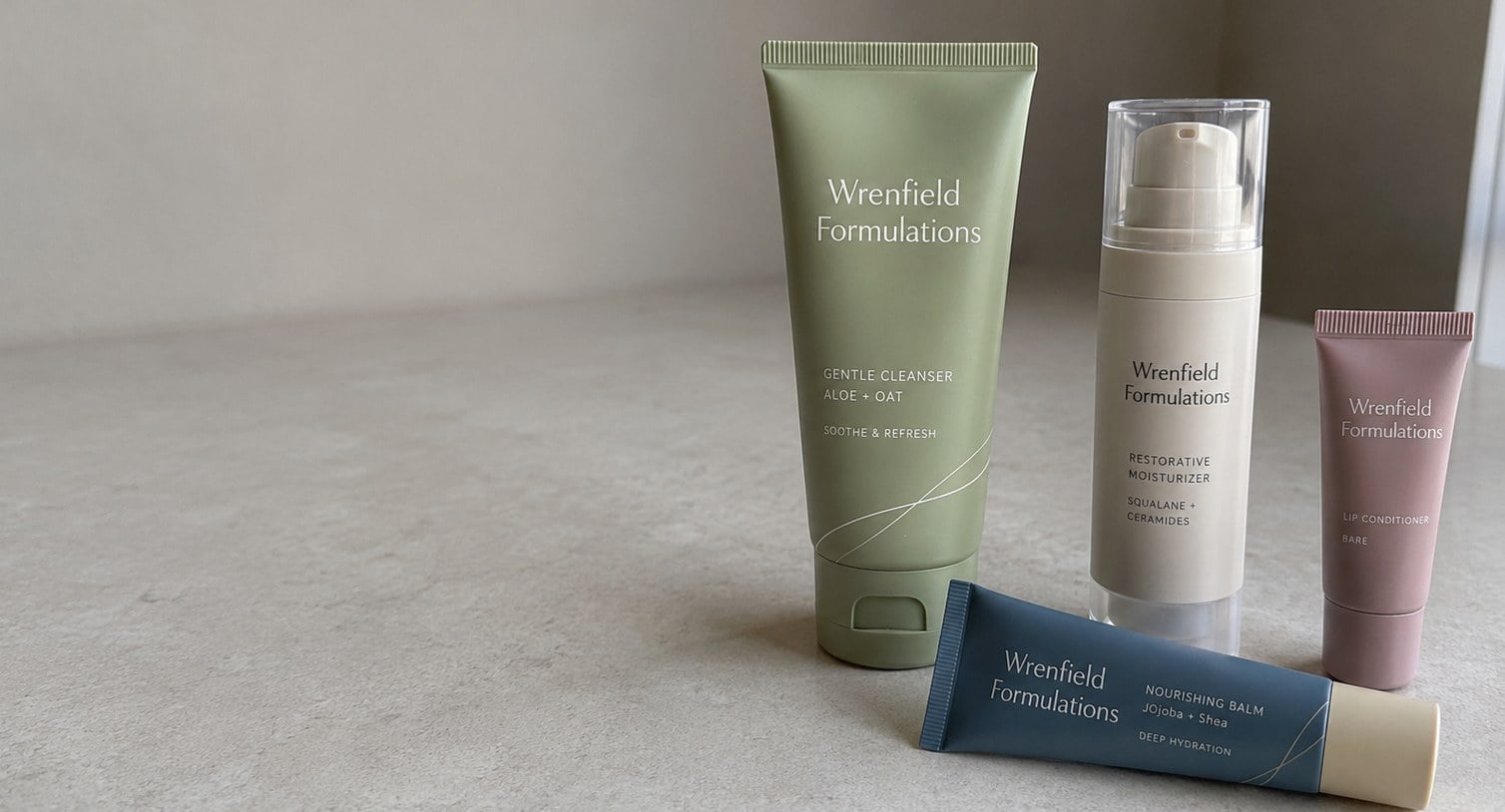
- Minimum order 12 per printed design.
- Size each run to a formula batch plus filling and sealing spares.
- Every design in a multi-product order is its own run and proof.
- Free mockup within 24 hours; standard turnaround 2 to 4 weeks after approval.
- Keep runs shallow when artwork, copy or tube material is about to change.
How many custom cosmetic tubes should you order for a first run?
For a first run of custom cosmetic tubes, order enough to cover your realistic sales and sampling until the next reorder could land, plus a modest buffer for filling losses. Because Custom Cosmetic Tubes starts at a minimum of 12 per design and standard turnaround is 2 to 4 weeks, a new brand does not need to gamble on a warehouse full of printed tubes to look established.
Start from the product, not the packaging. Work out how much formula your filler or kitchen can produce in one batch, how many units of that batch you expect to sell or give away before you can make the next one, and how many tubes the filling process will spoil along the way. The tube quantity follows from those three answers.
- Batch size: the number of tubes one batch of formula will fill at your chosen tube size.
- Sell-through window: how long that batch needs to last on shelves, online and in sample kits.
- Filling and sealing losses: tubes spoiled during setup, crimping or coding.
- Non-sale uses: press kits, retailer samples, photography and your own testing.
Many first-time buyers order the minimum of 12 for a pilot, confirm the fill, seal and print in real conditions, and then place a larger run once the formula and artwork are locked.
Should you order more cosmetic tubes than you have formula to fill?
You should order slightly more cosmetic tubes than you plan to fill, because filling and sealing almost always spoil a few. Setup tubes get used to calibrate the filler, some crimps come out uneven, and batch coding can smudge. If you order exactly the number of tubes you have formula for, the last few units of product end up with nowhere to go.
How large that buffer should be depends on the filling method. A contract filler running an automated line usually loses more tubes during machine setup than a small studio filling by hand, but loses fewer per unit once the line is running. Ask your filler directly how many spare tubes they want per run and per size, and build that into every order.
Spare printed tubes are also useful after launch. A replacement for a damaged unit, a last-minute retailer sample or a new photo shoot can all come from the same run, so the extra tubes rarely go to waste. Store spares flat, capped and out of direct sunlight so the print and the open tail stay clean until filling.
How do you split one cosmetic tube order across several products or sizes?
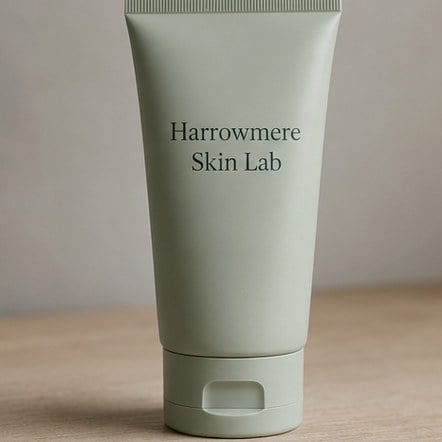
When one cosmetic tube order covers several products, plan each design as its own line with its own quantity, because each printed design is a separate run with its own minimum of 12. A cleanser, a moisturizer and a hand cream in the same tube size still need three separate artwork files and three quantities, even if the tube, cap and color are identical.
Weight each line by how fast that product actually moves. Your hero product deserves the deepest stock; a seasonal or experimental product deserves a shallow run you can top up if it sells. A table like the one below keeps the split honest.
| Product role | Quantity approach | Typical tube choice |
|---|---|---|
| Hero product | Deepest run; reorder early | Full-size squeeze tube |
| Supporting product | Moderate run sized to forecast | Same tube family as the hero |
| Limited or seasonal edition | Shallow run, no planned reorder | Shared blank tube with a new print |
| Samples and minis | Sized to events and gift-with-purchase plans | Sample and travel tubes |
Keeping as many products as possible on one tube diameter, cap and body color makes every later reorder simpler, because only the print changes from line to line.
How many sample-size cosmetic tubes should a brand plan for?
Sample-size cosmetic tubes should be planned from your distribution channels, not as a fixed fraction of full-size tubes. Count the places samples actually go: order inserts, event bags, retailer pitches, influencer kits and subscription boxes. Each channel has its own rhythm, and the sample run should cover the busiest period you can see coming.
Samples are usually filled with the same formula as the full-size product, so align the sample run with a formula batch rather than ordering minis on a separate schedule. A sample tube that arrives after the formula batch is used up sits empty until the next batch is made.
Think about artwork too. A mini tube has a much smaller back panel, so the sample run often carries a shortened layout with the essential lines only. That makes it a separate design with its own quantity and its own proof, which is worth knowing before you count. If the samples support a seasonal set, the guide to custom cosmetic tubes for holiday gift sets covers how minis fit into discovery sets.
When should you place a reorder for printed cosmetic tubes?
Place a reorder for printed cosmetic tubes when the tubes still in stock will last longer than the full lead time of the next run, measured from your approval to filled product on the shelf. With Custom Cosmetic Tubes, that lead time includes a quick proof check and 2 to 4 weeks of production, plus delivery to your filler and the time your filler needs to schedule the job.
The easiest way to stay ahead is to set a reorder point for each design: a stock level that triggers the next order automatically. Calculate it by estimating how many tubes you use during one full lead time and adding the filling buffer from your last run.
- Count printed tubes on hand at your warehouse and at your filler.
- Estimate how many you will use while the next run is produced and delivered.
- Add the spare tubes your filler asks for per run.
- Reorder as soon as stock falls to that level, not when the last carton opens.
Reorders are faster to approve when nothing changes, because the approved artwork is already on file. If you want to update copy or color, flag it at the start so the new proof is built into your timing.
Does changing artwork between runs affect how many cosmetic tubes to order?
Planned artwork changes should shrink your cosmetic tube order, because every printed tube carrying old artwork becomes obsolete the day the new design is approved. If an ingredient update, a rebrand or a new claim is coming, order only enough tubes to bridge the gap until the new artwork is ready.
Regulatory copy is the most common trigger. A reformulation changes the ingredient list, and the old tubes cannot legally carry the new formula. Before ordering a deep run, ask whoever owns your formula whether any change is planned in the coming months, and size the order around that answer.
A few habits protect you from waste:
- Keep volatile copy flexible: details likely to change, such as a promotional line, can live on an outer carton or a removable sticker rather than the tube itself.
- Separate front and back changes: a front logo rarely changes; the back panel changes more often, so plan around the back.
- Use up old stock deliberately: move remaining old-artwork tubes into sample kits or staff stock rather than discarding them.
How does tube material affect the quantity of cosmetic tubes to stock?
Tube material affects how long printed cosmetic tubes can sit in stock and how many you can safely hold. Empty tubes are stable, but their print, open tails and caps need clean, dry, shaded storage, and some brands plan a switch to a different material that would leave older stock behind.
If you are considering a move from barrier laminate tubes to mono-material PE tubes, or toward a PCR or refill program, treat it like an artwork change: keep current-material runs shallow until the decision is made, then order the new material in a pilot quantity first. The site’s comparison of mono-material vs. barrier laminate cosmetic tubes explains the trade-offs.
Formula compatibility also matters. A formula that needs a barrier layer should always be tested in the exact tube before a large run, because discovering an interaction after thousands of tubes are printed is the most expensive quantity mistake a brand can make.
What should you send with a quote request so the cosmetic tube quantity is right?
A quote request for cosmetic tubes gets an accurate answer fastest when it lists every design, its quantity, its tube size and style, and the date you need tubes at your filler. Custom Cosmetic Tubes uses those details to suggest whether to combine designs, adjust a run, or split delivery to protect your launch date.
- Each product or design, with the quantity per design (minimum 12 each).
- Tube type: squeeze, applicator or nozzle, airless or pump, or sample size.
- Fill volume or the size class you have in mind, plus cap style.
- Your logo and product copy, even in draft form.
- The in-hand date at your filler and whether faster delivery through express shipping is needed.
You get a free mockup within 24 hours, unlimited free revisions and nothing to pay until you approve the design. Start through the custom quote form, and see how it works for each step from quote to delivery.
Frequently asked questions
Is ordering 12 custom cosmetic tubes enough to test a new product?
Twelve custom cosmetic tubes is often enough to test a new product in real conditions. A pilot run lets you check how the formula fills, how the tail seals, how the print looks on the shelf and how the tube squeezes in daily use. Custom Cosmetic Tubes accepts 12 per design, so a pilot does not commit you to a large printed inventory.
How many spare cosmetic tubes should I give my contract filler?
Spare cosmetic tubes for a contract filler depend on that filler's line and setup process, so ask them directly before ordering. Automated lines often use extra tubes during calibration, while hand filling usually spoils fewer. Build the filler's requested spares into each design's quantity so the last of your formula batch still has a printed tube waiting.
Can I order different quantities for each design in one cosmetic tube order?
Cosmetic tube orders can carry a different quantity for each design, as long as every design meets the minimum of 12. A hero moisturizer might get a deep run while a seasonal scent gets a shallow one. Custom Cosmetic Tubes proofs each design separately, so every line is checked before production starts.
Should cosmetic tube quantities match my formula batch size?
Cosmetic tube quantities should be planned around your formula batch size, plus a buffer for filling losses. If a batch fills a certain number of tubes, ordering fewer leaves product unpackaged, and ordering far more ties up stock. Matching tube runs to batches also keeps printed lot information and storage planning simpler.
How long can printed cosmetic tubes be stored before filling?
Printed cosmetic tubes can be stored before filling when kept capped, flat, dry and out of direct sunlight, which protects the print and keeps the open tail clean. Storage life also depends on whether your artwork or formula is likely to change. Ask Custom Cosmetic Tubes about storage for your specific material when you request a quote.
Does a larger cosmetic tube order change the production timeline?
A larger cosmetic tube order usually follows the same process as a small one: free mockup within 24 hours, approval, then 2 to 4 weeks of production. Very large or multi-design runs can need extra scheduling, so mention your quantity and in-hand date in the quote request so Custom Cosmetic Tubes can confirm timing before you approve.
Can I split delivery of a cosmetic tube order between my warehouse and filler?
Cosmetic tube orders can often be split between a warehouse and a contract filler when you plan it in the quote. Note each delivery address and how many tubes per design go to each place. Splitting keeps sample stock close to your team while the bulk of the printed tubes arrives where filling actually happens.
What is a reorder point for printed cosmetic tubes?
A reorder point for printed cosmetic tubes is the stock level that triggers your next order. Calculate it by estimating how many tubes you use during one full lead time, from approval through production and delivery to your filler, then adding your filling buffer. Reordering at that level prevents a gap between empty shelves and the next run.
Should I order extra cosmetic tubes before a planned ingredient change?
Cosmetic tubes should not be stocked deeply before a planned ingredient change, because the old back panel becomes obsolete once the new formula ships. Order only enough tubes to bridge the gap until the updated artwork is approved. Remaining old-artwork tubes can be used for internal testing rather than relabeled or discarded.
How do I estimate cosmetic tube quantities for a pop-up or trade event?
Cosmetic tube quantities for a pop-up or trade event start from expected visitors, how many receive a sample, and how many full-size units you hope to sell. Add tubes for display and testers. Because Custom Cosmetic Tubes needs 2 to 4 weeks for production after approval, request your quote early enough to fill tubes before the event.
Is it cheaper per tube to order custom cosmetic tubes in larger runs?
Custom cosmetic tubes generally become more economical per tube as runs grow, because setup work is shared across more units. The right quantity still balances that against storage, cash tied up in stock and the risk of artwork changes. Custom Cosmetic Tubes quotes each quantity you are considering, so you can compare options before committing.
Get a free mockup for your cosmetic tubes
Send your logo or idea and the quantity you have in mind. Custom Cosmetic Tubes returns a free mockup within 24 hours, you approve the design before anything is produced, and standard turnaround is 2 to 4 weeks with faster options available. Get a custom quote.