Nobody asks what is going in the tube. That is the whole problem.
Custom Cosmetic Tubes makes cosmetic tubes to order — laminated tubes, lip gloss tubes with wand applicators and PE squeeze tubes.
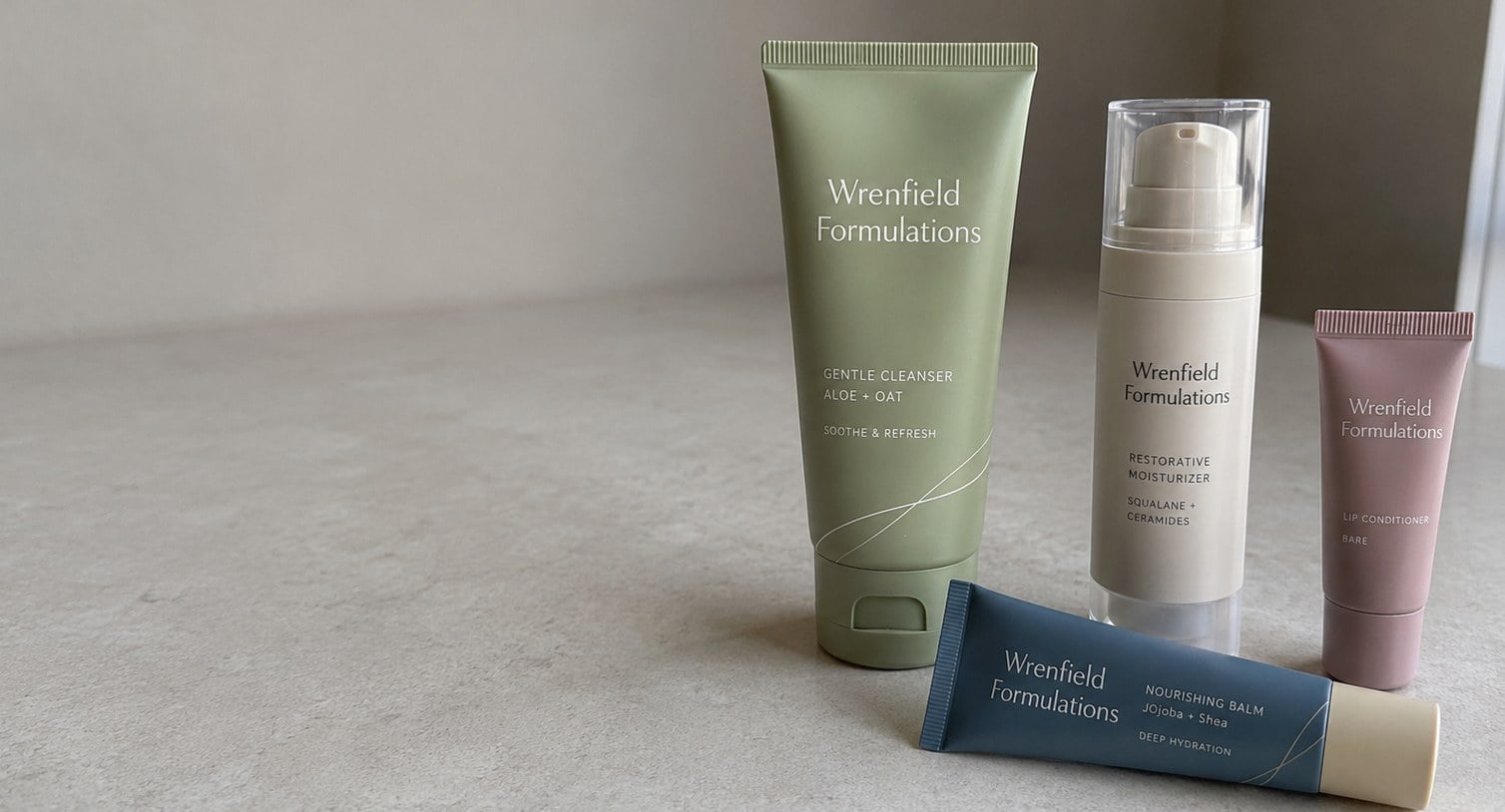
A tube is a container with a barrier problem. Polyethylene on its own lets oxygen move slowly in and fragrance move slowly out through the wall — over months, not days.
For a body lotion or a cleanser that is irrelevant. For a vitamin C serum, a retinol or a strongly fragranced product it is the difference between a two-year shelf life and a six-month one. A barrier layer of EVOH or thin aluminum foil stops it, and makes the tube much harder to recycle.
There is no free answer there, only a trade. So the first question we ask is what is going inside, and we will recommend the recyclable tube when the formula allows it and say so plainly when it does not.
Why we exist
Tubes get specified on size, color and cap style, from suppliers who never ask about the formula.
So a serum oxidizes in a recyclable tube and the brand blames the formulation. A balm will not come out of a needle orifice, so customers squeeze until the shoulder splits. Sample tubes weep into mailing boxes because the tail seal was set for a body-size tube. And a sustainability claim collapses under audit because the fifty-percent PCR figure covered the body and not the cap.
The orifice is chosen for the viscosity
This is the second most common failure and the easiest to prevent. A thin serum through a wide orifice floods out and gets wasted; a thick balm through a narrow needle nose will not come out at all.
What happens next is predictable: the customer squeezes harder and the tube bursts at the shoulder, which is the thinnest part of the wall. That reads as a manufacturing fault and it was a design decision. Send us a sample of the formula and we will run it through the actual orifice before any tooling is committed.
The tail seal is where tubes fail
A tube is filled from its open end and heat sealed shut, and that crimp is the part that leaks in a box.
Seal width should be specified for the format rather than borrowed from a larger tube, and then actually checked. It also means artwork has to stay clear of the seal area, because the jaws crush anything printed there — we mark that exclusion zone on every artwork template.
What we actually make
Laminated 5 oz lotion tubes in gold or silver finishes, laser engraved with your logo. Empty clear lip gloss tubes with a wand applicator, screen printed in one color. And small 0.35 oz PE squeeze tubes for lip butter and balm, screen printed in one color. The barrier layer, cap and recycled content of each tube are confirmed in writing with your quote.
Everything here is an extruded or laminate squeeze tube. We do not make paperboard tubes.
How we price
No dollar figures on this site. Price moves with material, barrier, size, decoration, cap and quantity, and it falls steeply at range volumes. Send the brief and a real quote comes back the same day, with a lowest-price guarantee if you are already holding a cheaper one.
What we will tell you before you buy
That your formula does not need airless. That high PCR content will shift your pastel slightly between batches. That a laminate tube will not be accepted curbside. That the applicator you liked on the render is worse than the plain nozzle for your viscosity.
Each of those costs us margin and saves you a print run.
How we work
BRIEF
Send the formula type, viscosity or a sample, and quantities.
SPEC
Barrier, orifice and seal chosen against the formula.
SAMPLE
Free samples, with your formula run through the real orifice.
ARTWORK
Template marked with the tail-seal exclusion zone.
MAKE
2 to 4 weeks after approval; new tooling adds time once.
Who we serve
Get in touch
Text or call George at (929) 605-4397, or email info@customcosmetictubes.com. Free mockups, low minimums, and a lowest-price guarantee.
Win Free Stuff
Enter below for a chance to win plus receive 10% off your first order.
🎉 You are in!
We will text you your 10% off code. Good luck!